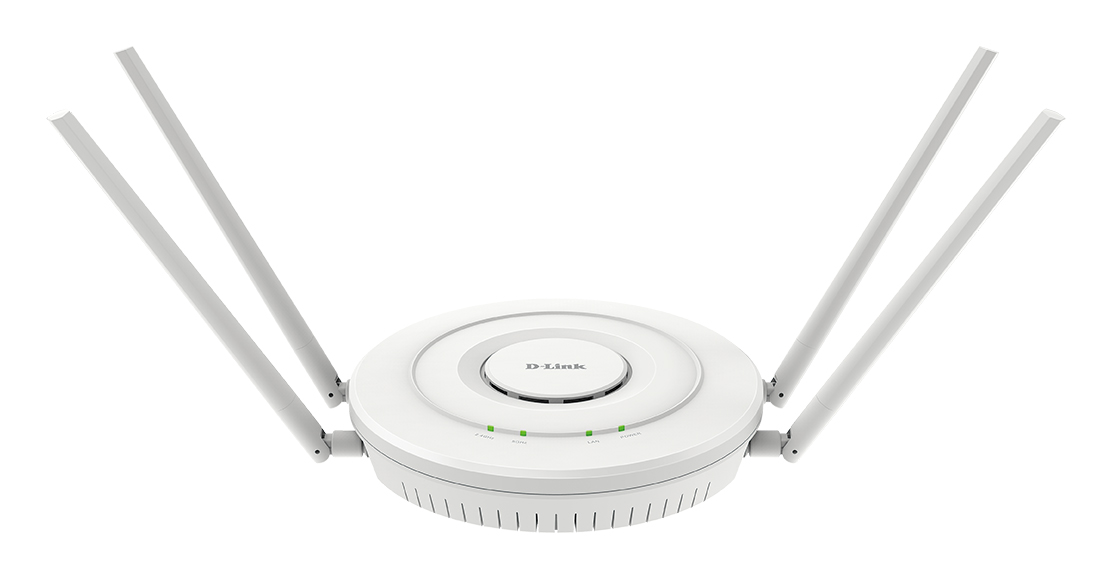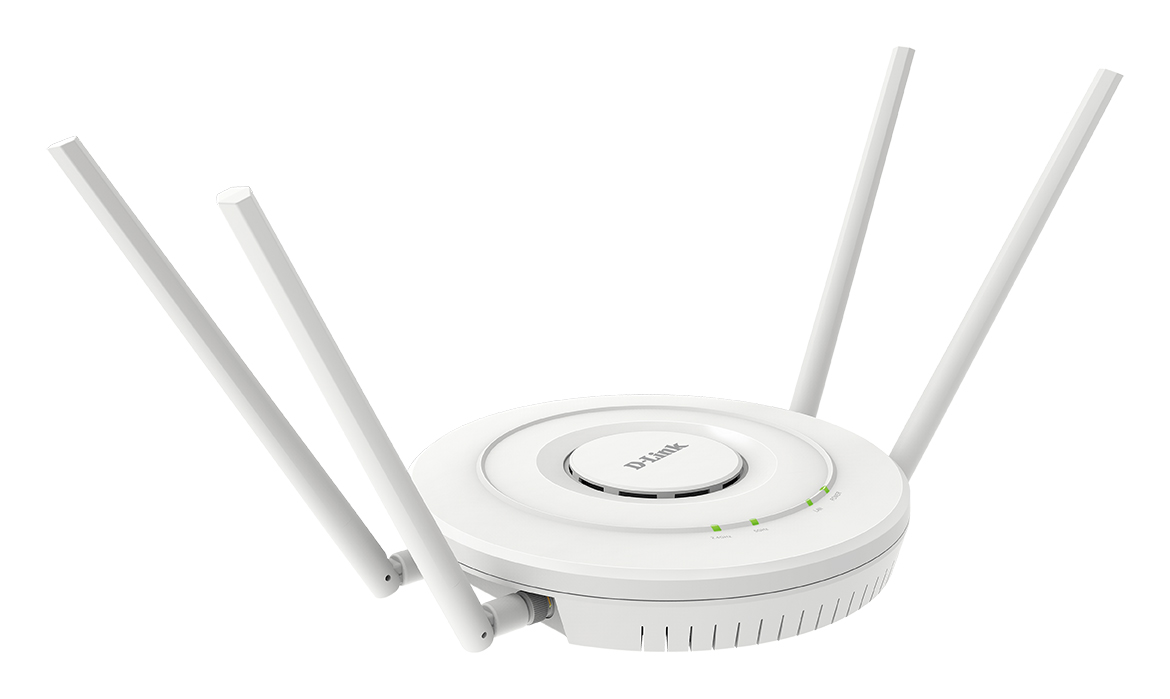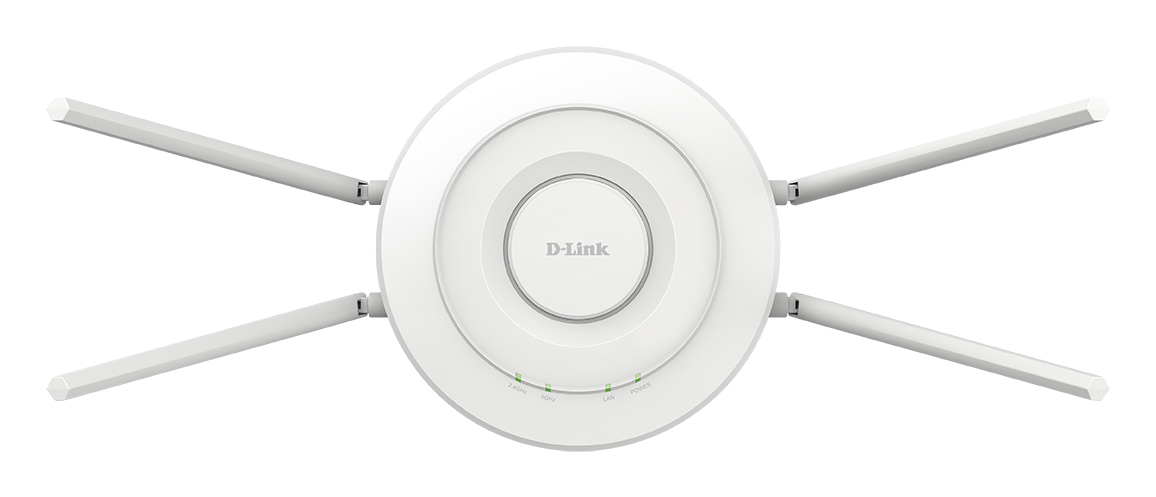
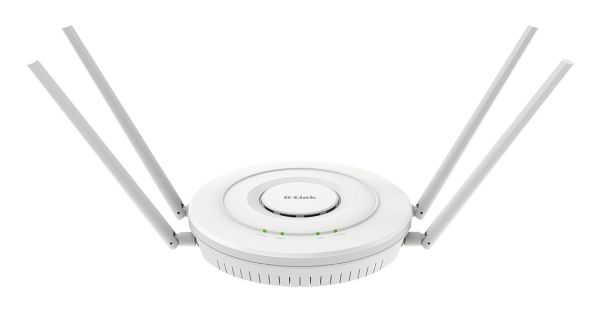
DWL-6610APE
Dual-Band 802.11n/ac Unified Wireless Access Point
Description
The DWL-6610APE Dual-Band 802.11n/ac Unified Wireless Access Point is designed for small to medium businesses and enterprises, providing unparalleled bandwidth and flexibility for medium to large scale Wi-Fi networks. Featuring the latest 802.11ac technology on its 5 GHz band, the DWL-6610APE allows you to deploy more devices and provide greater throughput for your wireless clients.
Greater Reach and Flexibility
The DWL-6610APE provides unparalleled connectivity by using a 2 x 2 antenna implementation, allowing high combined data rates of 1167 Mbps (867 Mbps1 for 802.11ac, and 300 Mbps1 for 802.11n) over the air. With 802.11n/ac technology, the DWL-6610APE provides high performance connections over two bands, so wireless clients can stream media faster and farther than before using existing devices.
Centrally Managed
When working in conjunction with D-Link Unified Controllers, the DWL-6610APE can be centrally managed. This allows for a large number of APs to be deployed and managed easily and efficiently. Once the APs are discovered by the controller, the administrator can push configuration to them as a group, instead of doing so individually. Additionally, Radio Frequency (RF) resource management allows wireless coverage to be managed centrally, proving the best coverage possible for wireless clients.
Self-Configuring Cluster
For small businesses that need to deploy multiple APs but lack the resources for complex network management, the DWL-6610APE self-configuring cluster allows a small number of DWL-6610APE access points to be set to form a self-configuring cluster. Once the administrator configures one access point, the same configuration can then be applied to all remaining APs, making setting up your wireless business network a breeze.
Performance Upgrade
The DWL-6610APE features an upgraded CPU, providing increased performance over its predecessor. The external omnidirectional antennas extends the range of the wireless signal, eliminating dead spots and filling hard-to-reach places. Bandsteering technology enables the DWL-6610APE to balance the load between its two radios rather than forcing all users onto the 2.4 GHz band, allowing for smooth streaming of video, seamless browsing, and fast downloads for mobile devices. Airtime fairness ensures that equal airtime is given to each client, providing increased performance even if slower devices are connected.
Automatic RF Management
When access points are deployed in close proximity to each other, there may be interference between channels if RF management is not implemented. When a DWL-6610APE senses a neighbor nearby, it will automatically select a non-interfering channel. This greatly reduces RF interference and will allow the administrator to deploy APs more densely. To further minimize interference, when a nearby AP is on the same channel, the DWL-6610APE will automatically lower its transmission power2. When, for whatever reason, the nearby AP is no longer present, the DWL-6610APE will increase its transmission power to expand coverage.
Quality of Service
The DWL-6610APE supports 802.1p Quality of Service (QoS) for enhanced throughput and better performance of time-sensitive traffic like VoIP and streaming DSCP. The DWL-6610APE supports Wi-Fi Multimedia (WMM), so in the event of network congestion, time-sensitive traffic can be given priority ahead of other traffic. Furthermore, when a number of DWL-6610APE units are in close proximity to each other, an access point will refuse new association requests once its resources are fully utilized, allowing the association request to be picked up by a neighboring unit, distributing the load over multiple APs.
General features
Hardware Revision
• B1
Interfaces
• 802.11b/g/n 2.4 GHz wireless
• 802.11ac/a/n 5 GHz wireless
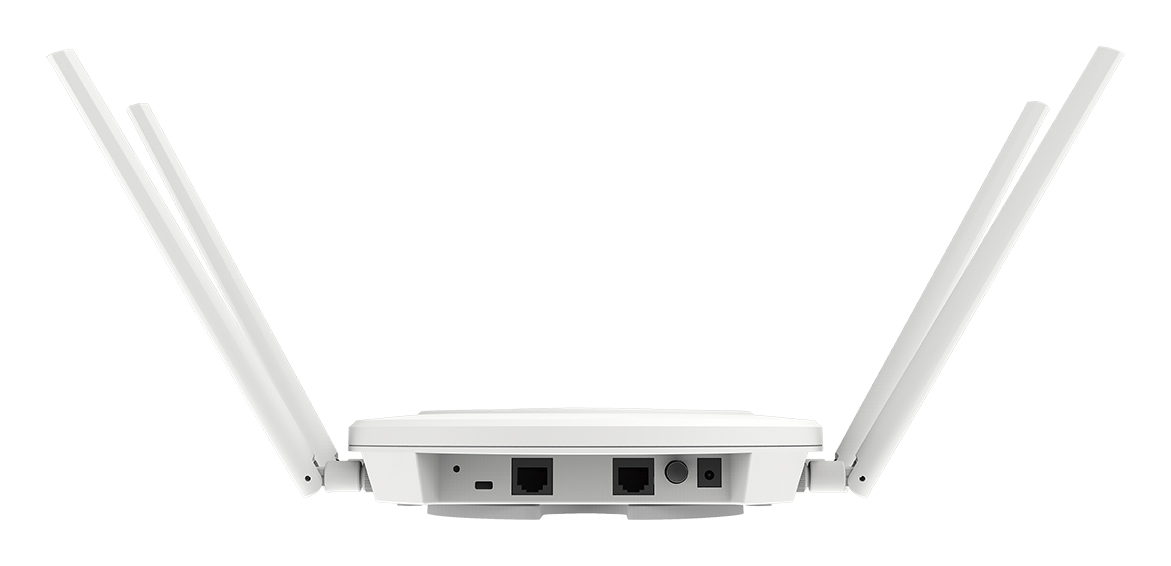
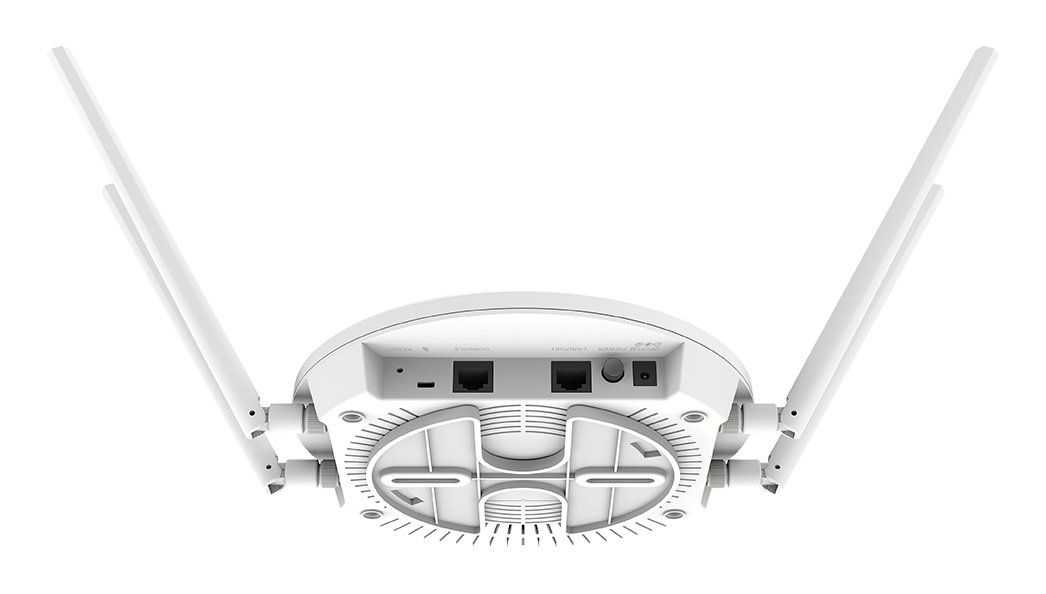
• 10/100/1000BASE-T LAN (PoE) port
LEDs
• Power
• LAN
• 2.4 GHz
• 5 GHz
Button
• Reset
• Power
Antenna
• External dual-band omnidirectional antennas
- 4 dBi for 5 GHz, 3 dBi for 2.4 GHz
MIMO
• 2x2
Housing
• Plenum rated for UL-2043 certification
Power
• DC Power Input
Wireless Module Parameters
Standards
• IEEE 802.11a/b/g/n/ac
Operating Channels
• 1 to 13 channels for 2.4 GHz band (per country code)
• 36 to 165 channels for 5 GHz band (per country code)
Frequency range3
• IEEE 802.11b/g/n (2.4 GHz): 2,400 ~ 2,4835 GHz
• IEEE 802.11a/n (5 GHz): 5,180 ~ 5,320 GHz; 5,745 ~ 5,825 GHz
• IEEE 802.11ac (5 GHz): 5,150 ~ 5,850 GHz
Wireless connection security
• Supports 32 SSID, 16 SSID per radio
• 802.1Q VLAN
• Station Isolation
• WPA/WPA2-Personal/Enterprise
• AES/TKIP
• EAP-MD5, EAP-TLS, EAP-TTLS, EAP-FAST, EAP-SIM, PEAP-GTC, PEAP-TLS, PEAP-MS CHAPv2, EAP-Fast and EAP-AKA
• Rogue AP Detection
• MAC filtering
Wireless connection rate
• IEEE 802.11a: 6, 9, 12, 18, 24, 36, 48 and 54Mbps
• IEEE 802.11b: 1, 2, 5,5 and 11Mbps
• IEEE 802.11g: 6, 9, 12, 18, 24, 36, 48, and 54Mbps
• IEEE 802.11n (2.4GHz/5GHz): from 6.5 to 300Mbps (from MCS0 to MCS15)
• IEEE 802.11ac (5GHz): from 6.5 to 867Mbps (from MCS0 to MSC9)
Transmitter output power4
• IEEE 802.11a:
21 (+/-2) dBm at 6~36Mbps
19 (+/-2) dBm at 48~54Mbps
• IEEE 802.11b:
14 (+/-2) dBm at 1~11Mbps
• IEEE 802.11g:
13 (+/-2) dBm at 6~54Mbps
• IEEE 802.11n:
2,4GHz/HT-20:
13 (+/-2) dBm at MCS0~7, MCS8~15
2,4 GHz/HT-40:
12 (+/-2) dBm at MCS0~7, MCS8~15
5GHz/HT-20:
21 (+/-2) dBm at MCS0~4, MCS8~12
19 (+/-2) dBm at MCS5~7, MCS13~15
5GHz/HT-40:
21 (+/-2) dBm at MCS0~4, MCS8~12
19 (+/-2) dBm at MCS5~7, MCS13~15
• IEEE 802.11ac:
21 (+/-2) dBm at MCS0~4
19 (+/-2) dBm at MCS5~7
18 (+/-2) dBm at MCS8
Receiver sensitivity
• IEEE 802.11a:
-82 (+/-2) dBm at 6Mbps
-81 (+/-2) dBm at 9Mbps
-79 (+/-2) dBm at 12Mbps
-77 (+/-2) dBm at 18Mbps
-74 (+/-2) dBm at 24Mbps
-70 (+/-2) dBm at 36Mbps
-66 (+/-2) dBm at 48Mbps
-65 (+/-2) dBm at 54Mbps
• IEEE 802.11b:
-89 (+/-2) dBm at 2Mbps
-83 (+/-2) dBm at 11Mbps
• IEEE 802.11g:
-82 (+/-2) dBm at 6Mbps
-81 (+/-2) dBm at 9Mbps
-79 (+/-2) dBm at 12Mbps
-77 (+/-2) dBm at 18Mbps
-74 (+/-2) dBm at 24Mbps
-70 (+/-2) dBm at 36Mbps
-66 (+/-2) dBm at 48Mbps
-65 (+/-2) dBm at 54Mbps
• IEEE 802.11n:
2,4GHz/HT-20:
-82(+/-2) dBm at MCS0/8/16
-79(+/-2) dBm at MCS1/9/17
-77(+/-2) dBm at MCS2/10/18
-74(+/-2) dBm at MCS3/11/19
-70(+/-2) dBm at MCS4/12/20
-66(+/-2) dBm at MCS5/13/21
-65(+/-2) dBm at MCS6/14/22
-64(+/-2) dBm at MCS7/15/23
2,4GHz/HT-40:
-79(+/-2) dBm at MCS0/8/16
-76(+/-2) dBm at MCS1/9/17
-74(+/-2) dBm at MCS2/10/18
-71(+/-2) dBm at MCS3/11/19
-67(+/-2) dBm at MCS4/12/20
-63(+/-2) dBm at MCS5/13/21
-62(+/-2) dBm at MCS6/14/22
-61(+/-2) dBm at MCS7/15/23
5GHz/HT-20:
-82(+/-2) dBm at MCS0
-79(+/-2) dBm at MCS1
-77(+/-2) dBm at MCS2
-74(+/-2) dBm at MCS3
-70(+/-2) dBm at MCS4
-66(+/-2) dBm at MCS5
-65(+/-2) dBm at MCS6
-64(+/-2) dBm at MCS7
5GHz/HT-40:
-79(+/-2) dBm at MCS0
-76(+/-2) dBm at MCS1
-74(+/-2) dBm at MCS2
-71(+/-2) dBm at MCS3
-67(+/-2) dBm at MCS4
-63(+/-2) dBm at MCS5
-62(+/-2) dBm at MCS6
-61(+/-2) dBm at MCS7
• IEEE 802.11ac:
VHT-20:
-82dBm at (MCS0)
-79dBm at (MCS1)
-77dBm at (MCS2)
-74dBm at (MCS3)
-70dBm at (MCS4)
-66dBm at (MCS5)
-65dBm at (MCS6)
-64dBm at (MCS7)
-59dBm at (MCS8)
-57dBm at (MCS9)
VHT-40:
-79dBm at (MCS0)
-76dBm at (MCS1)
-74dBm at (MCS2)
-71dBm at (MCS3)
-67dBm at (MCS4)
-63dBm at (MCS5)
-62dBm at (MCS6)
-61dBm at (MCS7)
-56dBm at (MCS8)
-54dBm at (MCS9)
VHT-80:
-76dBm at (MCS0)
-73dBm at (MCS1)
-71dBm at (MCS2)
-68dBm at (MCS3)
-64dBm at (MCS4)
-60dBm at (MCS5)
-59dBm at (MCS6)
-58dBm at (MCS7)
-53dBm at (MCS8)
-51dBm at (MCS9)
Management
System Management
• Web-based user interface (HTTP/HTTPs)
• Telnet/SSH
• Support SNMP (v1/v2/v3)
Advanced Features
• Quality of Service (QoS)
- WMM
Operating Mode
• Access Point
• WDS
Physical Parameters
Weight
• 476 g
Dimensions (L x W x H)
• 205 x 39 mm
Operating Environment
Power
• Output: 12V DC, 1.5A
Power consumption
• 10.2watt (max.)
Temperature
• Operating: from 0 to 40 °C
• Storage: from -20 to 65 °C
Humidity
• Operating: from 10% to 90% (non-condensing)
• Storage: from 5% to 95% (non-condensing)
Delivery Package
• DWL-6610APE Unified AC Concurrent Dual-band PoE Access Point
• Mounting Ring
• Ceiling Bracket
• Console Cable
Certification
• CE
• FCC
• IC
• cUL+UL
• LVD
• RCM
• NCC
• BSMI
• UL2043
• Radio Patterns
1Maximum wireless signal rate derived from IEEE standard 802.11 and 802.11ac specifications. Actual data throughput will vary. Network conditions and environmental factors, including volume of network traffic, building materials and construction, and network overhead, lower actual data throughput rate. Environmental factors will adversely affect wireless signal range.
2This feature is available when Unified AP is used in conjunction with D-Link’s line of Unified Wireless Switches/controllers.
3The frequency range depends upon the radio frequency regulations applied in your country.
4The maximum value of the transmitter output power depends upon the radio frequency regulations applied in your country
Certificates
Order info
DWL-6610APE Dual-Band 802.11n/ac Unified Wireless Access Point
Pictures
DWL-6610APE/A